
How Long Does Heat Pump Installation Take? A Complete Timeline Breakdown
Wondering how long heat pump installation really takes? Get a real day-by-day timeline from survey to commissioning, plus what can speed things up or slow them down.

Written by Heat Pump Buddy
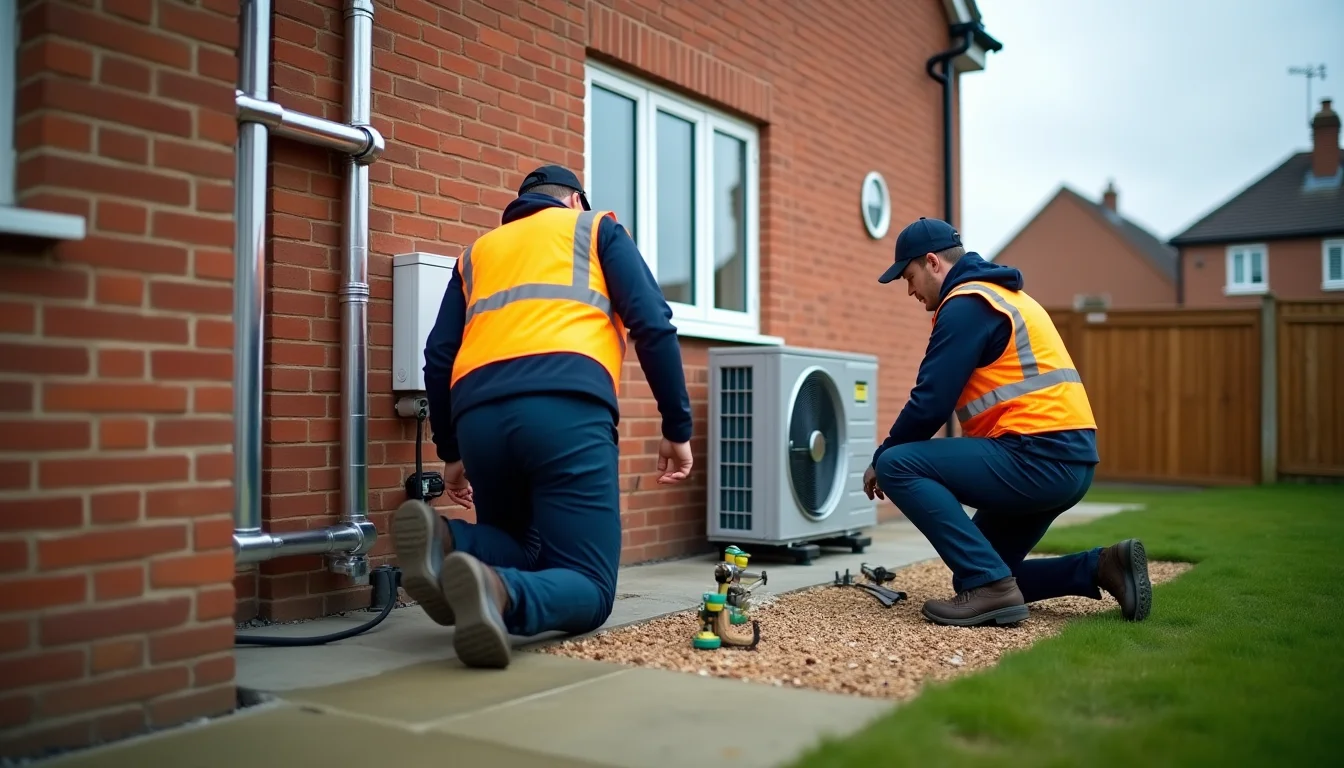
A typical air source heat pump installation takes between 2 and 4 days of on-site work once the installers actually arrive. But the full process, from your initial survey through to a fully commissioned system, usually spans 6 to 12 weeks. The biggest chunk of that waiting time isn't the physical install itself; it's the survey, design work, grant application, and scheduling.
What Does the Full Heat Pump Installation Timeline Look Like?
Most homeowners focus on the days the engineers are physically at their property. That's understandable, but the real timeline starts much earlier.
Here's how the full process typically breaks down in 2026:
Weeks 1-2: Initial enquiry and survey booking. You contact MCS certified installers, get quotes, and book a home survey. Some installers can get out within a few days. Others are booked up for weeks, especially during autumn when demand spikes before winter.
Weeks 2-4: Home survey and system design. A qualified surveyor visits your property to assess insulation levels, radiator sizes, hot water demand, and where the outdoor unit will sit. They'll also check your electrical supply. This visit usually takes 1 to 3 hours. After the survey, the installer produces a detailed design and a formal quote, which can take another week.
Weeks 4-6: Quote acceptance and grant application. Once you accept the quote, your installer applies for the £7,500 Boiler Upgrade Scheme grant on your behalf through Ofgem. Approval typically takes 2 to 3 weeks in 2026, though it can be faster.
Weeks 6-10: Scheduling and equipment ordering. Your installer orders the heat pump, hot water cylinder, and any other components. They'll book your installation slot. Some popular models have lead times of 2 to 4 weeks.
Weeks 10-12: Installation days. The on-site work happens. For a straightforward air source heat pump retrofit in a semi-detached house, expect 2 to 3 days. More complex jobs can stretch to 4 or 5 days.
Day-by-Day Breakdown: What Happens During the On-Site Installation?
Let's say you're having an air source heat pump fitted in a 3-bed semi, replacing a gas boiler. Here's a realistic day-by-day picture.
Day 1: Preparation and outdoor unit. The team arrives, usually two or three engineers. They lay a concrete pad or mount a pre-cast base for the outdoor unit. They position the heat pump, run refrigerant pipework through the external wall, and begin connecting to the indoor system. If your old boiler is being removed, that usually happens on day one as well. The plumber drains the system and strips out the old boiler and flue.
Day 2: Indoor pipework and hot water cylinder. The new hot water cylinder goes in, typically in the same cupboard as the old one, though it's usually taller and wider. Pipework connects the heat pump to the cylinder and to your existing radiator circuit. If any radiators need upsizing (common in bathrooms and kitchens), that work happens today.
Day 3: Electrical connections and commissioning. A qualified electrician connects the heat pump to your consumer unit, often on its own dedicated circuit. The system gets filled, pressurised, and bled. The installer runs through the commissioning process: checking flow temperatures, testing defrost cycles, setting up the controls and any smart thermostat. They should also walk you through how to use the system properly. This handover matters more than you might think, because heat pumps work best when you understand the "set and forget" approach rather than constantly adjusting the thermostat.
That's the tidy version. Reality sometimes adds a half day or a full extra day depending on what the installers find once they open things up.
What Factors Can Make Heat Pump Installation Take Longer?
Not every install is a quick three-day job. Several things can stretch the timeline.
Property type matters a lot. A detached Victorian house with single-pipe radiator circuits and poor loft insulation will take longer than a modern new-build. Older pipework often needs modifying or replacing. If your radiators are undersized for the lower flow temperatures a heat pump uses (typically 35-45°C versus 60-70°C from a gas boiler), some or all of them may need swapping out.
Ground source heat pumps are a different beast entirely. If you're going for a ground source system, you need to add time for trenching or borehole drilling. Horizontal ground loops need a large garden and a digger, which usually adds 2 to 3 days. Vertical boreholes require specialist drilling rigs and can add a week or more. The total on-site time for a ground source installation is typically 5 to 10 days.
Electrical supply upgrades can cause delays. Some older properties only have a 60-amp main fuse. Most air source heat pumps need a 100-amp supply. If your DNO (distribution network operator) needs to upgrade your supply, this can add weeks to the timeline, because you're waiting on their schedule, not your installer's.
Planning permission is rarely needed, but sometimes it is. Most air source heat pumps fall under permitted development rights. But if you live in a listed building, a conservation area, or a flat, you may need planning approval. That can add 8 to 12 weeks on its own.
Can the Heat Pump Installation Timeline Be Shortened?
Yes, and a few practical steps can shave weeks off.
Get multiple quotes early. Don't wait until October to start thinking about it. Installers are busiest from September through December, and lead times balloon during those months. Starting the process in spring or early summer gives you far more flexibility.
Have your loft insulation and cavity walls sorted before the survey. If the surveyor flags insulation issues, they can't finalise the system design until those are addressed. Getting ahead of this avoids a back-and-forth that drags things out.
If you already know your electrical supply is up to scratch, mention it. And if you have a recent EPC, share it with the installer. Small things like this speed up the survey and design stage.
Frankly, the single biggest factor is choosing an installer who's well-organised and communicates clearly. A good installer will give you a clear project plan with dates. If they can't tell you roughly when the work will happen, that's a red flag.
How Does the £7,500 Boiler Upgrade Scheme Grant Affect the Timeline?
The Boiler Upgrade Scheme (BUS) grant is still available in 2026, offering £7,500 off the cost of an air source heat pump and £7,500 for ground source systems. The grant is applied for by your MCS certified installer, not by you directly.
The grant application itself typically adds 2 to 3 weeks to the overall timeline. Your installer submits the application to Ofgem after you've accepted the quote, and the work can't begin until the voucher is issued. In practice, most installers use this waiting period to order equipment and schedule the job, so it doesn't always add dead time.
One thing to be aware of: the BUS budget is allocated on a first-come, first-served basis each financial year. If uptake is high, there can be a rush towards the end of the financial year in March. Getting your application in well before that avoids any risk of the pot running dry before your voucher is processed.
You don't pay the £7,500 upfront and claim it back. The grant is deducted from your invoice, so you only pay the balance. For a typical air source heat pump installation costing £10,000 to £14,000 in 2026, that means you're paying roughly £2,500 to £6,500 out of pocket.
"Will My Heating Be Off During Installation?"
This is the question almost every homeowner asks, and it's a fair one. Nobody wants to be without hot water and heating for days, especially if the work happens in autumn or winter.
The honest answer: yes, there will be a period without heating. Typically, your old boiler is removed on day one and the new system isn't fully commissioned until day two or three. That means one to two nights without central heating.
Most installers try to minimise this. Some will keep the old boiler running until the last possible moment before switching over. If you're having the work done in colder months, it's worth asking your installer about their approach. A good team will plan the sequence so that you have hot water back by the end of day two at the latest.
If you're worried, consider scheduling the installation for a milder month. May through September is ideal. You won't miss the heating, and installers tend to have more availability.
Frequently Asked Questions
How many days does it take to install an air source heat pump?
Most air source heat pump installations take 2 to 4 days of on-site work. A straightforward retrofit in a standard semi-detached house usually takes 2 to 3 days. More complex jobs involving radiator upgrades, pipework modifications, or electrical supply work can stretch to 4 or 5 days.
How long does the whole heat pump process take from start to finish?
From your initial enquiry to a fully working system, expect 6 to 12 weeks. The physical installation is only 2 to 4 days of that. The rest is taken up by surveys, system design, grant applications through the Boiler Upgrade Scheme, equipment ordering, and scheduling.
Do I need to be home during heat pump installation?
You don't need to be present for every minute, but someone should be at the property throughout. The installers will need access to rooms with radiators, the hot water cupboard, and the consumer unit. You should definitely be there for the final commissioning and handover so the engineer can show you how to operate the system.
Is heat pump installation messy and disruptive?
There's some disruption, but it's manageable. Expect noise from drilling through external walls, some dust from pipework routing, and a period without heating while the old boiler is removed and the new system is connected. Good installers lay dust sheets and clean up at the end of each day. The outdoor unit installation involves some concrete work, but it's a small area.
Does a ground source heat pump take longer to install than air source?
Yes, significantly. Ground source heat pump installations typically take 5 to 10 days of on-site work because of the trenching or borehole drilling required for the ground loop. Horizontal trenches need a digger and a large garden, adding 2 to 3 days. Vertical boreholes require specialist drilling rigs and can add a week or more to the total installation time.
If you're ready to get the process started, use our directory at heatpumpinstallerdirectory.co.uk to find MCS certified heat pump installers in your area. You can compare local companies, check their credentials, and request quotes directly. The sooner you book your survey, the sooner you'll have a working system and that £7,500 grant secured.