
How to Install a Heat Pump in a Small Garden or Tight Space
Think your garden's too small for a heat pump? Think again. Here's how UK homeowners are fitting heat pumps into the tightest spaces and still claiming £7,500.

Written by Heat Pump Buddy
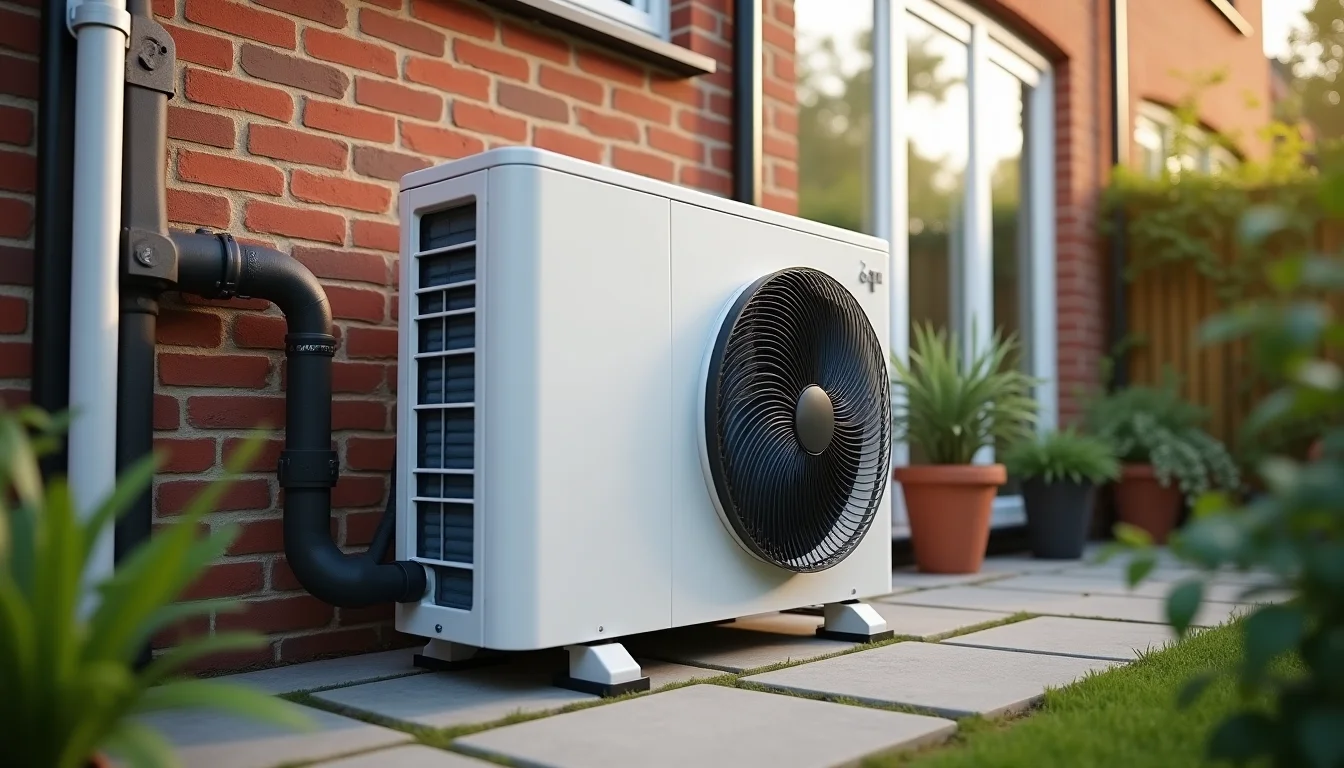
Yes, you can install a heat pump in a small garden. Modern air source heat pumps are roughly the size of a large suitcase, and many models are specifically designed for tight spaces, sitting just 30cm from a wall. A good MCS certified installer will survey your property, consider noise rules and airflow requirements, and find a spot that works, even if your outdoor space is barely bigger than a patio.
Do You Actually Need a Big Garden for a Heat Pump?
No. This is probably the most common misconception putting UK homeowners off. An air source heat pump needs roughly the same footprint as a washing machine, typically around 800mm wide by 600mm deep.
What it does need is adequate airflow around the unit and enough clearance from boundaries and neighbours' windows to meet permitted development rules and noise regulations. In practice, a strip of space down the side of a terraced house or a corner of a small courtyard garden is often more than enough.
Ground source heat pumps are a different story. They need either a large garden for horizontal trenches or deep boreholes, which can work on smaller plots but cost more. For most homeowners with limited outdoor space, an air source unit is the obvious choice.
Which Heat Pumps Fit in the Smallest Spaces?
Several manufacturers now make compact units aimed squarely at the UK housing stock, where gardens under 50 square metres are completely normal.
The Vaillant Aroatherm Plus 5kW, for example, measures just 1,040mm tall by 870mm wide. Daikin's Altherma 3 is similarly compact. Samsung's EHS Mono units are popular with installers for small properties because they're quiet and don't need much clearance.
Frankly, if your installer tells you your garden is too small without even doing a survey, find a different installer. The technology has moved on significantly, and most UK homes can be fitted with a suitably sized unit.
Space-Saving Installation Techniques That Actually Work
A skilled installer has several tricks up their sleeve for tight spaces.
Wall-mounted brackets can lift the heat pump off the ground entirely, fixing it to a sturdy exterior wall at a height that keeps airflow clear and saves precious garden space. This works particularly well on the side return of a terraced or semi-detached house.
Corner installations use the angle where two walls meet, positioning the unit so it draws air from the open side. This can turn a dead corner into the perfect spot.
Split-system configurations separate the outdoor unit from the indoor components, meaning you don't need a big utility room inside either. The refrigerant lines run through a small hole in the wall, much like an air conditioning unit.
One thing to keep in mind: wherever the unit goes, it needs to be accessible for annual servicing. Don't let anyone box it in completely.
What About Noise in a Small Garden?
This is a fair concern. In a small garden, the heat pump will be closer to your living space and possibly closer to your neighbours too.
The good news is that modern units are genuinely quiet. Most operate at around 40-50 decibels at one metre, which is about the same volume as a fridge humming or light rainfall. At three metres, that drops to roughly background noise levels.
Permitted development rules in England say the unit must not exceed 42dB at the nearest neighbour's window. In a tight space, an installer might use acoustic barriers, anti-vibration mounts, or position the unit so the fan faces away from neighbouring properties. These are standard solutions, not special requests.
If you're in a particularly tight spot, ask your installer about models with "quiet mode" or "night mode" functions. Samsung and Vaillant units, for instance, can throttle down to well below 40dB during evening hours.
Can You Still Get the £7,500 BUS Grant for a Small-Space Installation?
Absolutely. The Boiler Upgrade Scheme grant of £7,500 doesn't care how big your garden is. As long as you're replacing a fossil fuel heating system in a home in England or Wales, using an MCS certified installer, and meeting the scheme's eligibility criteria, the grant applies.
As of 2026, the BUS grant is still available and covers a significant chunk of installation costs. A typical air source heat pump installation runs between £10,000 and £14,000, so with the grant, you could be looking at an out-of-pocket cost of around £2,500 to £6,500.
The grant is applied by your installer on your behalf, so you never have to pay the full amount upfront. Your installer handles the MCS paperwork, the grant application, and the compliance certificates.
One thing worth knowing: the installation must meet MCS standards regardless of space constraints. That means proper clearances, correct pipe insulation, and a system designed to heat your home efficiently. A cramped, bodged installation won't pass certification and won't qualify for the grant.
"My House Is Too Old or Too Small for a Heat Pump" — Is That True?
Let's tackle this head on, because it stops a lot of people from even getting a quote.
A two-bedroom Victorian terrace in South London with a 4m x 3m paved courtyard garden can absolutely have a heat pump. We've seen installations in ex-council flats with nothing more than a narrow balcony, and in mid-terrace homes where the unit sits on a bracket beside the back door.
The real question isn't whether a heat pump will physically fit. It's whether your home's insulation is good enough for the heat pump to work efficiently. A well-insulated small home actually needs a smaller heat pump, which means a smaller outdoor unit.
If your home has solid walls, your installer might recommend some insulation improvements first. But that's true for any heating system, not just heat pumps. And many older UK homes have already had cavity wall or loft insulation done through previous government schemes.
Honestly, the only situation where space genuinely rules out a heat pump is if there's literally no external wall or outdoor area available. That's rare for houses, though it does apply to some flats.
Frequently Asked Questions
Can you put a heat pump in a small back garden?
Yes. Most air source heat pumps need a footprint of less than one square metre. As long as there's adequate airflow around the unit and it meets the 42dB noise limit at the nearest neighbour's window, a small back garden is perfectly suitable. Many UK homes with gardens under 30 square metres have successful installations.
How close to the house can an air source heat pump be?
Most manufacturers recommend a minimum clearance of 200-300mm from the wall behind the unit, though some models allow less. The front or fan side typically needs at least 1-2 metres of clear space for proper airflow. Your installer will check the specific clearance requirements for the model they recommend.
Do I need planning permission for a heat pump in a small garden?
In most cases, no. Air source heat pumps fall under permitted development rights in England, Scotland, and Wales, provided the unit doesn't exceed 42dB at the nearest neighbour's habitable room and meets size restrictions. If you live in a listed building or conservation area, you may need to check with your local planning authority.
What is the smallest air source heat pump you can buy in the UK?
Some of the most compact units available in the UK in 2026 include the Vaillant Aroatherm Plus and Samsung EHS Mono range, both of which have models under 900mm wide. A 4-5kW unit is often sufficient for a well-insulated small home and takes up roughly the same space as a large wheelie bin.
How much does it cost to install a heat pump in a terraced house?
A typical air source heat pump installation in a terraced house costs between £10,000 and £14,000 before the BUS grant. After the £7,500 grant, homeowners usually pay between £2,500 and £6,500. The exact cost depends on the size of the system, any pipework modifications needed, and whether you need a new hot water cylinder.
Find an Installer Who Knows Small Spaces
Getting the right installer makes all the difference, especially in a tight space where experience with compact installations really matters. Use our directory at heatpumpinstallerdirectory.co.uk to find MCS certified heat pump installers near you who can survey your property, design a system that fits, and handle your £7,500 BUS grant application. Get three quotes, compare them, and pick someone who's done this before in homes like yours.